|
Villa e Casino Panfili, detta del Bel Respiro
(Libro X)
(VI giorno)
In questa pagina:
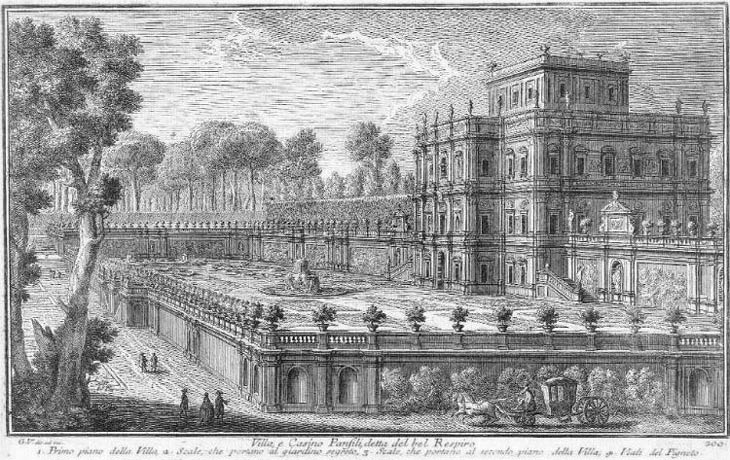 With this plate Vasi comes to the end of his work and he chooses for
this the largest Villa of Rome, Villa Panfili or Villa del Bel Respiro,
because of the fresh air one could breathe there
owing to the western winds and the pine trees. The view is taken from the
green dot in the small 1748 map here below. In the description below the
plate Vasi made reference to: 1) Lower floor of the Villa; 2) Steps
leading to the hidden garden; 3) Steps leading to the upper floor of the
Villa; 4) Pinetum (plantation of pines). La piantina non mostra 4)
Pinetum, ma 5) Arco dell'Acqua Paola. 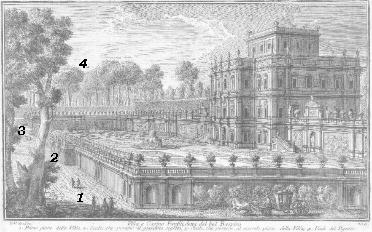  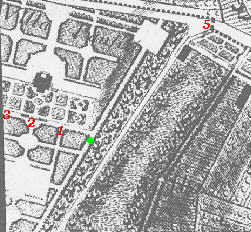
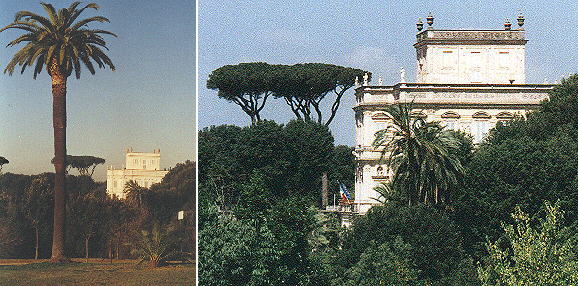
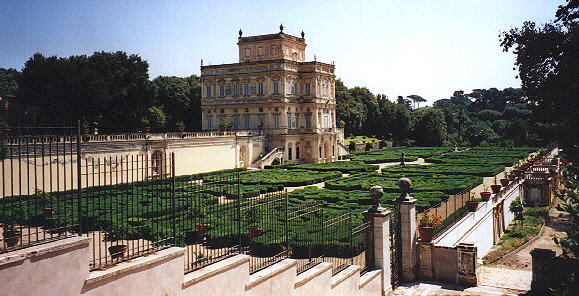
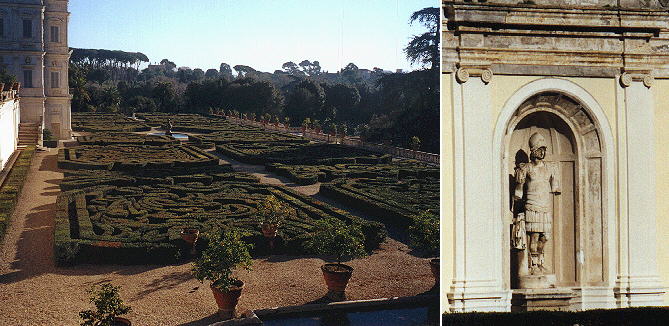
The view from the east is limited because of the trees, so to see the secret garden in front of the Casino, one has to move to the western side.
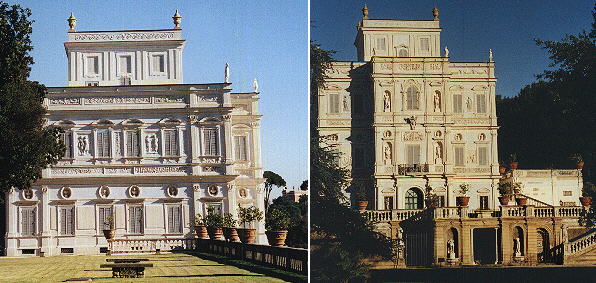
Il Casino fu costruito nel 1644-52 da Alessandro Algardi a spese del
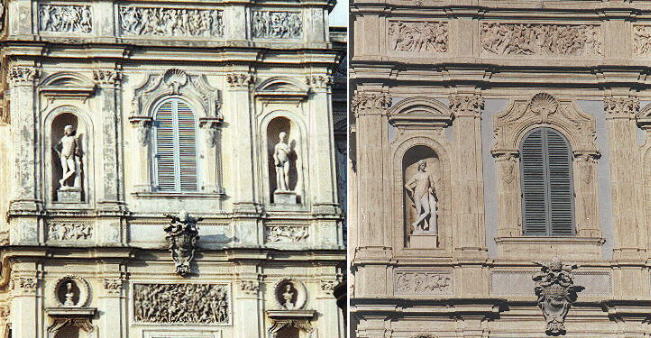
Principe Camillo Panfili, nipote di Papa Innocenzo X (stemma sulla facciata).
The Prince had at first requested Francesco Borromini to
design it, but the excessively innovative ideas of Borromini did not
satisfy him, so he commissioned the Casino to Alessandro Algardi, who had
a great reputation as a sculptor, but a limited experience as an
architect. After long discussions with the Prince, Algardi designed a
traditional palace with a very rich decoration, very similar to that of Villa Borghese. In
Algardi's plans, the Casino had two wings embracing the garden. The Casino
is called after Algardi to distinguish it from Villa Vecchia (the old
villa), an existing building which was largely modified in the XVIIIth
century (sullo sfondo della pagina una colomba dei Panfili del soffitto di Villa
Vecchia).
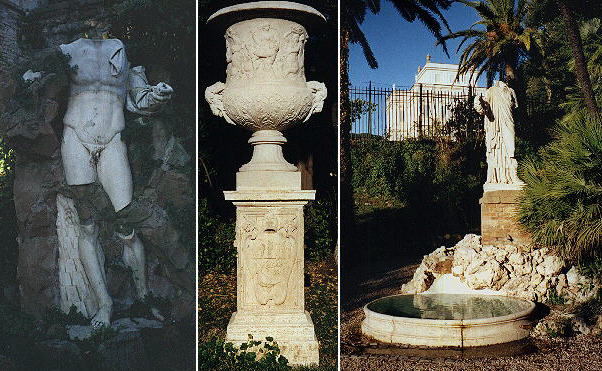
Villa Panfili (o Doria - Panfili come divenne nota dopo la morte nel 1740 di Donna Anna, l'ultima dei Panfili che aveva sposato Giovanni Andrea Doria) fu acquistata dal Governo Italiano negli anni Cinquanta.Il parco è apero al pubblico, mentre il Casino è usato dal Presidente del Consiglio per incontri ufficiali. The building was recently repainted in the "sky" color which was very common in the XVIIIth century. One of the reasons for the high number of sculptures and reliefs is due to the fact that several Roman tombs had been found in the area of the Villa which is immediately outside Porta S. Pancrazio, the starting point of Via Aurelia. In addition Algardi had many assistants and was in a position to provide the statues and reliefs necessary to complete the decoration.
The secret garden is embellished in a very classical way. Algardi was the leader of the "classical" school which regarded Borromini and to some extent Bernini as unorthodox and bizarre artists. Fontane
The Casino was used only in summer when the weather made staying outside pleasant. To this purpose Algardi designed a large open air theatre decorated with reliefs and busts. The decoration includes a syrinx (a Pan-pipe) which shows how the shepherds' life was regarded as an idyllic world.
At the center of the terrace Algardi designed a large fountain based on the fleur-de-lys, one of the heraldic symbol of the Panfili family.
Nei Giardini
The park was split in several parts closed by railings and gates.
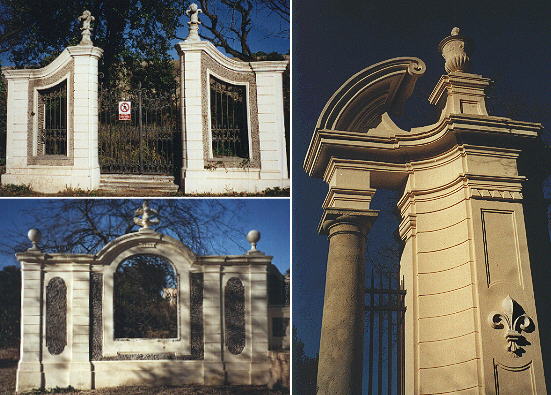
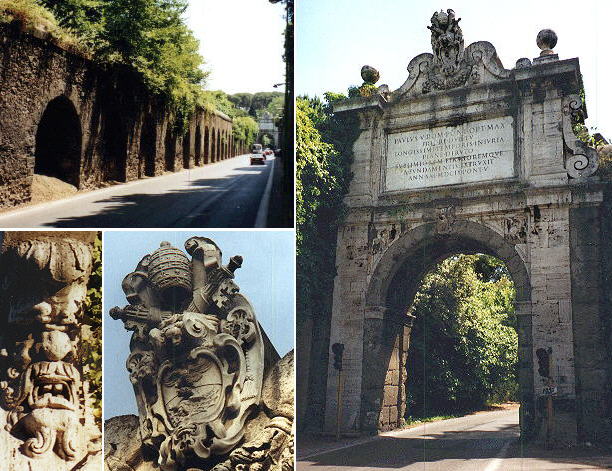
The Panfili had so many palaces that they had a permanent position for an
architect. The fine gates below were designed by Gabriele Valvassori in
1732.
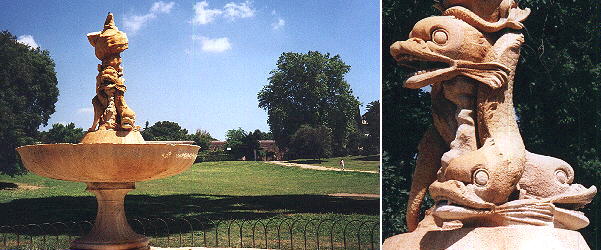
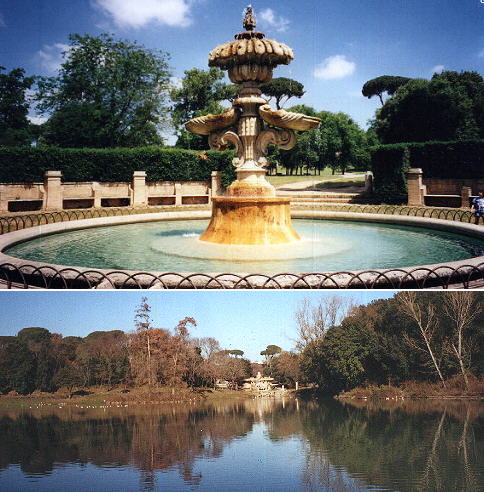
Also in the park one comes across several interesting fountains. Qui sotto la Fontana della Lumaca del Bernini with the recurring motif of the shell and the dolphins.
Gabriele Valvassori designed an artificial waterfall originating from Fontana del Giglio, a fountain sculpted by Algardi for the terrace in front of the Casino. The water ends in a little pond.
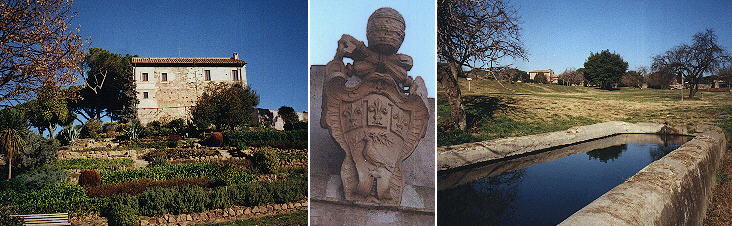
 Alla Fattoria La parte occidentale della Villa fu usata come fattoria e invece di fontane vi si trovano abbeveratoi per animali. Questa parta ha un ingresso indipendente con un bello stemma di Innocenzo X.
Arco dell' Acqua Paola
The northern wall of the park is in part made by the arches of an
old Roman aqueduct which Paulus V rebuilt to bring water to the hills on
the right bank (Acqua
Paola). At the point where the aqueduct crosses Via Aurelia Antica a
large arch was built, which looks like another of the gates of Rome.
VIVETE
FELICI! |