 |
FORTEZZE PAPALI |
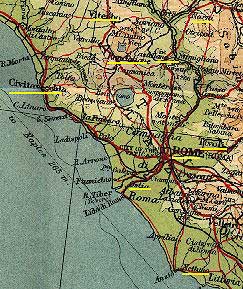 Questa piantina mostra le città dove i Papi costruirono le fortezze
descritte in questa pagina
Questa piantina mostra le città dove i Papi costruirono le fortezze
descritte in questa pagina
(Castiglione del Lago e Spoleto - in altra pagina si trovano più a nord. Spesso queste fortezze sono chiamate "Rocca", dato che si trovano in cima a una collina. Il Lazio Settentrionale e l'Umbria sono aree dove quasi ogni città ha una Rocca. Alcune di esse sono state usate fino a tempi recenti come prigioni. |
|
 During the period when the Popes left Rome for Avignon most of the towns of their Italian possessions fell under the rule of local families as was the case in other parts of central and northern Italy. Cardinal Egidio Albornoz was charged with the task to reconquer at least the areas closest to Rome to pave the way for the return of the Pope. He did not only achieve this, but he also laid down the basis for keeping his conquests by building fortresses in strategic positions. Narni, an important medieval town worth a visit, commands a narrow gorge of the Tiber key to Central Umbria and here Cardinal Albornoz built an imposing fortress which still retains the coats of arms of Urbanus V and Gregorius XI, the last two Popes who lived in Avignon. Compare the tower of this fortress with that of the Palazzo dei Papi in Avignon. The coats of arms, among the oldest one can find, show both the keys and the triregnum (the crown of the pope), although as separate entities.
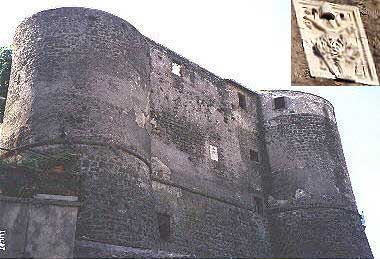 On the border of the small Lago di Vico, uno dei tre laghi vulcanici del Lazio Settentrionale, Ronciglione has an open view from the sea to the inner valleys. Dominio della famiglia Anguillara, fu riunito allo Stato Pontificio nel 1469 e Papa Sisto IV eresse in the center of the little town this menacing fortress and left several coats of arms with his oak to remind of the glory of the Della Rovere.
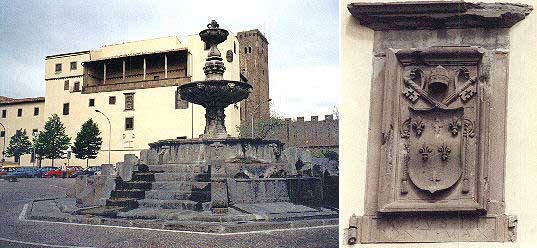 Viterbo nella seconda metà del XIII secolo era forse la seconda città per importanza dello Stato Pontificio. Era protetta da mura imponenti e i papi vi trascorrevano lunghi periodi; alcuni vi venivano eletti. Il Cardinal Albornoz costruì qui un'altra Rocca, which we can now see after Renaissance restorations and embellishments as the loggia clearly shows and lo stemma di Paolo III conferma. Civita Castellana
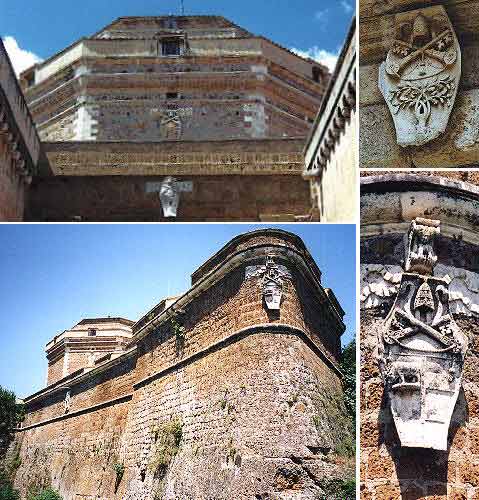 Questa fortezza di Civita Castellana era nota anche come "La Bastiglia dei Papi" dato che venivano imprigionati qui i patrioti Italiani dell'800. Sulla Valle del Tevere, immediatamente a nord del Monte Soratte, questa fortezza fu costruita da Alessandro VI e completata da Giulio II che incaricò Antonio da Sangallo (il Vecchio) di erigere il bastione ottagonale. E' un capolavoro di architettura militare, tuttora ben conservato.
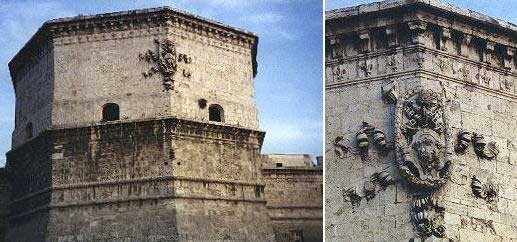 Civitavecchia
è il porto del Rinascimento e della Roma di oggi, mentre Ostia era il
porto dell'Antica Roma.
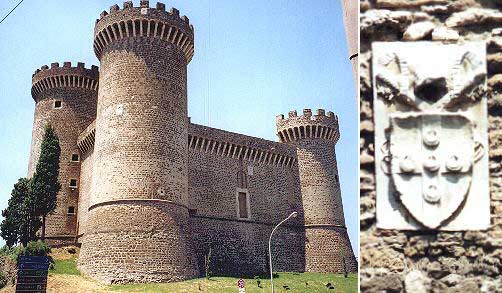 Tivoli, an important town under the Emperors, retained its role of sentinel of the East also during the Popes' rule. The castle was built under Pius II and retains the name of Fortezza Pia. The five little moons of the Piccolomini are one of the most intriguing coats of arms.
 Ostia the gateway to Rome coming from the sea hosts this castle built
at the end of the XVth century by Baccio Pontelli for Julius II (at the
time Cardinal Giuliano Della Rovere). The enemy here was the Saracen.
Wherever you are on the shores of Italy you can see a tower or a castle
and once you reach one another one comes into view. The Saracens (Arab
corsairs and later on Turkish corsairs) were the terror of the people who
lived along the coast for nearly a thousand years. Rome itself was sacked
in 846 by the Saracens who landed in Ostia and the Popes were scared this
could happen again, so they all contributed to the security of Rome by
reinforcing its early defence in Ostia. Here you can see the coats of arms
of (left to right) Sixtus IV, Julius II, Innocentius VIII and Martinus V.
You can learn more about this fortress cliccando QUI.
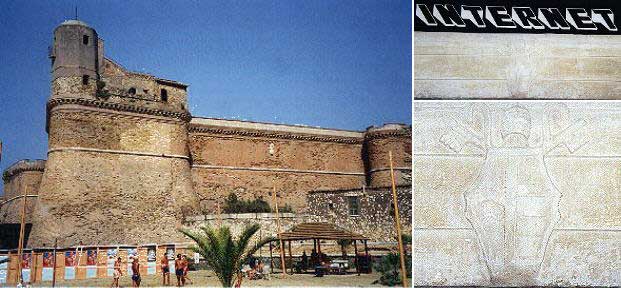 The area between the Albano Hills and the sea, south of Rome, was covered by marshes. Nettuno on the sea at the very edge of the marshes assured defence on this flank. Alexander VI entrusted Antonio da Sangallo the Elder with the task of tranforming an existing tower into a fortress. Now you can see it watching over peaceful bathers. Inside there are today occasional exhibitions and I came across this symbol of my own homepage! Castel Sant'Angelo
 Originariamente Tomba dell'Imperatore Adriano (la Mole Adriana), divenne una delle fortezze di Roma durante il Medioevo (un'altra era il Colosseo) e alla fine la fortezza dei Papi per la sua vicinanza al Vaticano. Un collegamento diretto (il Passetto) permetteva ai papi di trovare rifugio qui. Alessandro VI fu uno dei papi che più contribuì al rafforzamento e all'abbellimento della fortezza. Il suo stemma all'esterno della costruzione fu però cancellato dalle truppe francesi agli inizi dell'800. Così, per vedere la giovenca dei Borgia (la mucca che appare nel loro stemma) bisogna entrare nell'edificio (oggi un museo) dove sono in mostra parecchi loro stemmi.
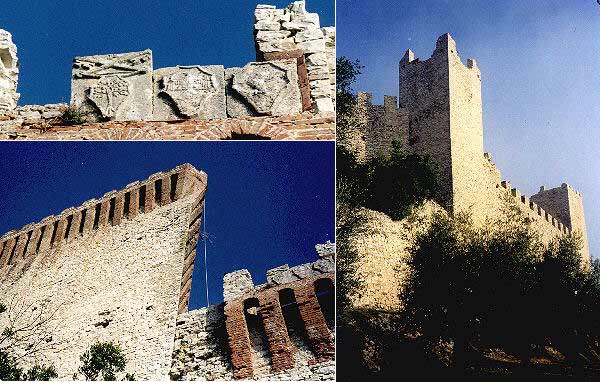 Sulle sponde del Lago Trasimeno vicino al confine con la Toscana c'è Castiglione del Lago. Il nome dice tutto. Su di una collinetta che domina il lago e la pianura, Giulio II costruì questa fortezza - che ancora conserva il suo stemma - per prevenire un eventuale attacco fiorentino. Ma oggi gli olivi attorno alle mura parlano di pace. |